
Jan 12

Working with Cervical Disc Disease

A Clinical Pilates Perspective
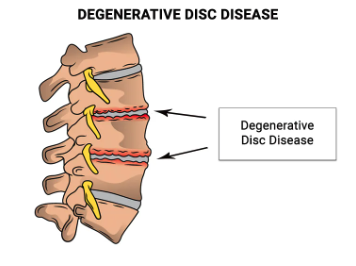
Cervical disc disease, whether due to degenerative disc changes, disc bulging, or herniation, is a common source of neck pain, radicular symptoms, and movement dysfunction in Pilates clients. As an instructor, understanding the underlying pathomechanics and appropriate exercise selection is essential for promoting both safety and therapeutic benefit.

Understanding The Condition

Cervical disc disease involves structural degeneration or displacement of the intervertebral disc, often most pronounced at the C5–C6 and C6–C7 levels. This may lead to nerve root irritation, reduced cervical stability, and compensatory overactivity of superficial neck musculature. Clients frequently present with neck stiffness, radiating arm symptoms, or postural dysfunction (e.g., forward head and rounded shoulder posture).

The clinical goal in a Pilates setting is to reduce compressive load, enhance deep cervical stabilizer activation, and restore balanced movement control through the cervical and shoulder girdle complex.

Adjunct Technique: Cervical Traction

Cervical traction can be a beneficial adjunct for clients with disc pathology, as it helps decompress the intervertebral spaces, reduce radicular pain, and decrease neural tension. Gentle manual or mechanical traction—when medically approved—can relieve symptoms and prepare the client for exercise by improving alignment and decreasing muscle guarding.

In a Pilates context, this concept translates to maintaining axial elongation and spinal decompression cues throughout movement. Encourage clients to “lengthen the back of the neck” and “float the head away from the shoulders” to create a self-traction effect during exercises.

Indicated Pilates Exercises

Write your awesome label here.
Empty space, drag to resize
Cervical Chin Nods
  • This foundational movement promotes activation of the deep cervical flexors (longus capitis and colli) while minimizing recruitment of the sternocleidomastoid.
1. Purpose: Re-establish segmental cervical stability and neutral alignment.
2. Cueing: Have the client gently nod “yes” while maintaining contact of the occiput with the mat, focusing on the sensation of elongation rather than flexion.
Empty space, drag to resize
Forearm/Front Planks
  • Supported planks on the forearms or reformer carriage can safely integrate core co-activation with cervical and scapular stabilization.
1. Purpose: Strengthen the deep stabilizing system while maintaining cervical elongation under load.
2. Cueing: Encourage “reach through the crown of the head” to maintain gentle traction and prevent cervical compression.
Empty space, drag to resize
Quadruped Scapular Isolations
  • In this position, the spine is unloaded while the shoulder girdle is retrained for stability and dissociation.

1. Purpose: Reinforce scapulothoracic control and reduce compensatory neck tension.  
2. Cueing:
 Maintain neutral cervical alignment as the client protracts and retracts the scapulae without shifting head or spine position.

For clients with cervical disc disease, Pilates can be highly therapeutic when movement is approached with spinal decompression, segmental control, and balanced muscular activation in mind. Combining precise cueing, controlled loading, and an awareness of cervical traction principles allows instructors to help clients regain function and confidence safely.
Created with