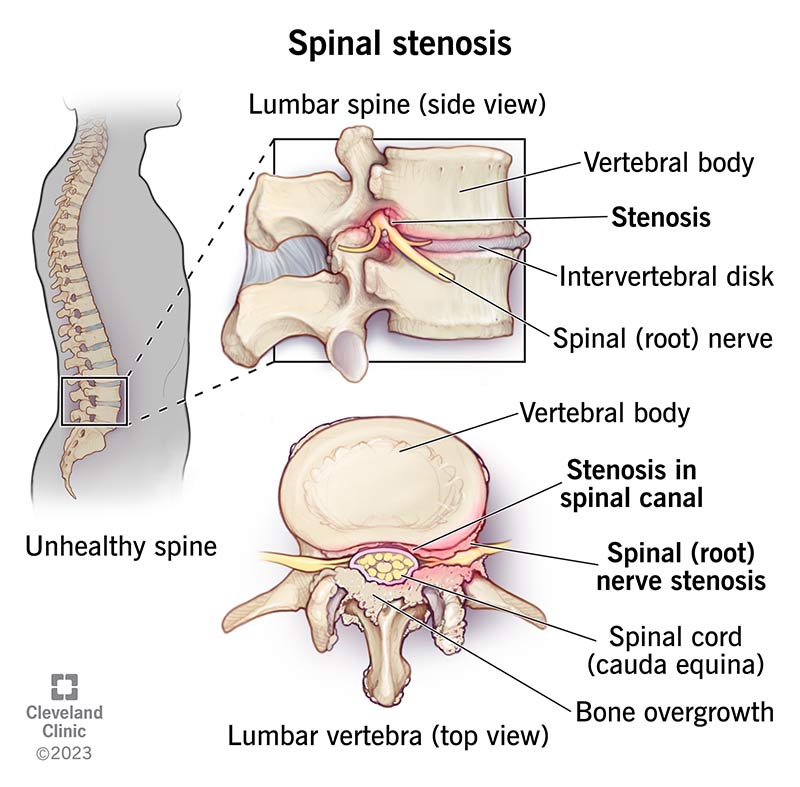
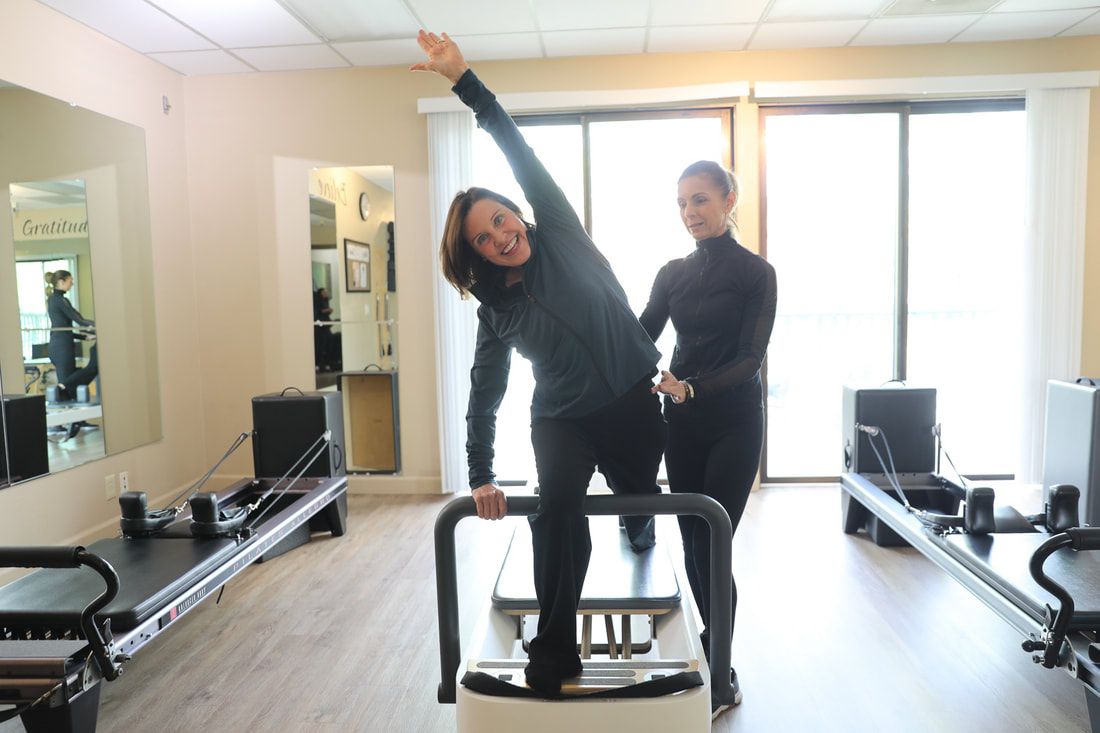
The lumbar spine is a dynamic, weight-bearing structure responsible for stability, load transfer, and movement during daily and athletic activities. At its core are the vertebrae, intervertebral discs, facet joints, and neural structures that allow both flexibility and protection of the spinal cord and nerve roots.
Lumbar spinal stenosis, which involves a narrowing of the spinal canal or intervertebral foramina, can significantly impair mobility and function. For rehabilitative Pilates instructors, understanding this condition and designing safe, supportive interventions is essential for helping clients move with greater ease and confidence.
What Is Lumbar Spine Stenosis?
Lumbar spinal stenosis is a degenerative condition characterized by reduced space within the spinal canal or nerve root exit points (foramina). This narrowing can compress neural and vascular structures, leading to pain, numbness, or weakness in the lower back and legs.
Pathophysiology of Lumbar Spinal Stenosis
Degenerative disc height loss due to aging or prior injury
Facet joint arthropathy involving degeneration and thickening of the facet joints
Osteophyte (bone spur) formation along vertebral bodies or joints
Ligamentum flavum thickening and infolding into the spinal canal
Symptom Presentation of Lumbar Stenosis
Low back pain or stiffness.
Leg pain, tingling, or numbness, especially during walking or standing.
Relief when sitting or bending forward, known as neurogenic claudication.
Weakness or reduced endurance in the lower extremities.
Like many degenerative spinal conditions, lumbar stenosis often responds well to movement-based, conservative management. Pilates provides a valuable framework to restore mobility, posture, and control while minimizing neural irritation.
How Can We Help as Pilates Instructors?
The goal of rehabilitation for spinal stenosis is to decrease neural compression, improve mobility, and enhance postural and muscular support of the lumbar spine. Pilates facilitates gentle, controlled movement patterns that help clients rediscover efficient spinal mechanics without aggravating symptoms.
Key Rehabilitation Priorities Include:
Restoring pain-free mobility through flexion-based and neutral spine movements.
Strengthening the deep core stabilizers, including the multifidus, transverse abdominis, and pelvic floor.
Improving hip and thoracic mobility to reduce compensatory lumbar stress.
Encouraging optimal posture and alignment to decompress the spine during daily movement.
Effective Pilates-Based Exercises for Lumbar Stenosis
1. Supported Lumbar Flexion and Core Activation:
Supine pelvic tilts or imprints on the reformer or mat encourage gentle decompression.
Partial roll-downs and pelvic curls promote segmental control and core activation without excessive load.
2. Restoring Hip and Thoracic Mobility:
Hip flexor and gluteal stretches reduce anterior pelvic tension that can accentuate lumbar compression.
Thoracic extension and rotation on the foam roller or arc barrel improve spinal distribution of movement, easing lumbar demand.
3. Posterior Chain Engagement:
Bridging variations build glute and hamstring strength to support lumbar stability.
Side-lying leg work enhances hip alignment and promotes pelvic control during gait.
4. Closed-Chain Strengthening and Postural Training:
Supported squats or chair leg presses encourage balanced lower extremity strength with controlled spinal alignment.
CoreAlign or wall-supported standing exercises retrain upright posture and weight transfer without compressing the spine.
Effective Pilates Exercises for Lumbar Stenosis Clients
1. Supported Lumbar Flexion and Core Activation:
Supine pelvic tilts or imprints on the reformer or mat encourage gentle decompression.
Partial roll-downs and pelvic curls promote segmental control and core activation without excessive load.
2. Restoring Hip and Thoracic Mobility:
Hip flexor and gluteal stretches reduce anterior pelvic tension that can accentuate lumbar compression.
Thoracic extension and rotation on the foam roller or arc barrel improve spinal distribution of movement, easing lumbar demand.
3. Posterior Chain Engagement:
Bridging variations build glute and hamstring strength to support lumbar stability.
Side-lying leg work enhances hip alignment and promotes pelvic control during gait.
4. Closed-Chain Strengthening and Postural Training:
Supported squats or chair leg presses encourage balanced lower extremity strength with controlled spinal alignment.
CoreAlign or wall-supported standing exercises retrain upright posture and weight transfer without compressing the spine.
Exercises to Avoid or Modify Early in Recovery
Certain movements can increase compression or irritate neural structures if introduced too soon or performed without proper control.
1. Lumbar Extension-Based Movements: Exercises such as Swan, Long Stretch, or prone backbends increase canal narrowing and may worsen symptoms.
2. Loaded Axial Compression: Heavy resistance or vertical loading, including weighted standing work or jumpboard, can aggravate neural compression.
3. End-Range or Forced Lumbar Rotation: Excessive twisting in the lumbar region can irritate exiting nerve roots. Keep rotation small and led by the thoracic spine instead.
4. Unsupported Standing or Single-Leg Work: Delay challenging balance or single-leg exercises until strength, posture, and endurance are well established.
Key Takeaways for Pilates Instructors
Lumbar spinal stenosis requires a patient and informed approach to movement and exercise. With a deep understanding of spinal anatomy and degenerative processes, Pilates offers a safe and effective pathway to restore function, reduce pain, and enhance confidence in movement.
For professionals working with clients affected by lumbar stenosis, the key lies in precision, progression, and posture. By emphasizing decompression, core stability, and movement efficiency, Pilates can play a pivotal role in maintaining long-term spinal health and improving quality of life.
Our students love us
I love how practical and clear the curriculum is, and I enjoy the lists of exercises that are indicated and contraindicated for each condition with the full understanding of the reasons behind them. I super recommend to any Pilates instructor.
Carla martins
Created with
Login or sign up to start learningLogin to start learning